The desk already exists
No new position, no new queue, no new signage. The service goes where money orders already go.
Independent grocers already run a service desk — money orders, bill payments, sometimes a transfer window. Crypto sits on the same desk, takes no space, and is worth many times more per transaction.
$300.00
USDT · bought at the service desk on a Saturday
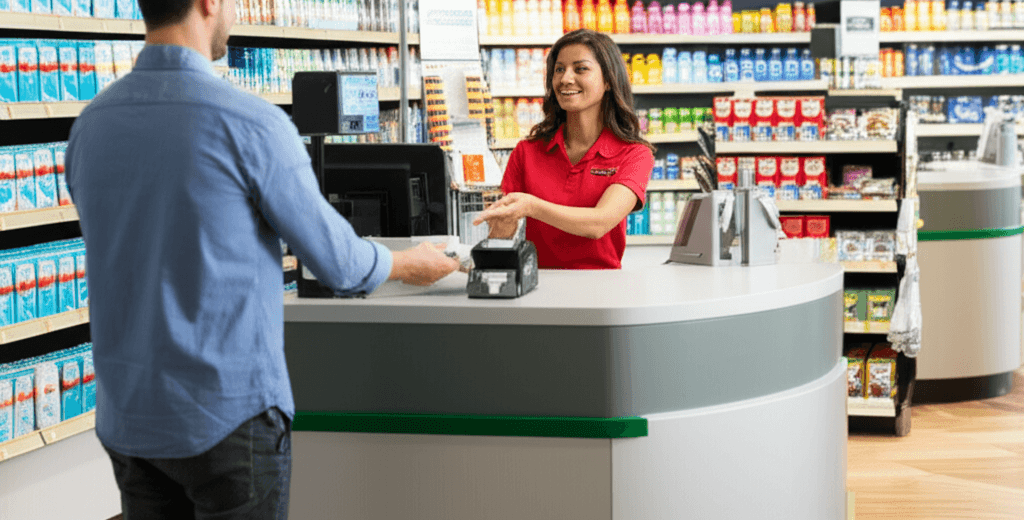
In independent grocery and in neighbourhood carnicerías, the service desk quietly became a financial services counter years ago. Money orders, utility bill payments, phone top-ups and check cashing all ended up there because customers were coming in weekly anyway and the alternative was a separate trip.
Crypto is the same logic. The customer is already in the store, already at the desk, already handing over cash. The only thing that changes is what the transaction is worth to you, and that difference is large: nothing else on a service desk is priced as a percentage of a several-hundred-dollar order.
The weekly rhythm helps more than it sounds. A grocery customer's visit frequency is one of the highest in retail, which means a verified crypto customer has a natural reason to be back in front of your desk within seven days.
Why it fits
Every store type in this program runs the same platform. What changes is the customer, the ticket size and the objection — so this is the part written for you rather than for everybody.
No new position, no new queue, no new signage. The service goes where money orders already go.
Grocery is one of the few categories where the same customer is genuinely in your store every week.
The only product in the building with none of the three problems that define grocery retail.
Carnicerías and ethnic grocers sit at the centre of exactly the households already asking about stablecoins.
Getting started
Where the store is, what it already offers, and what your foot traffic looks like. We tell you straight away whether we can serve your market.
Entity documents, ownership and any licences your store already holds. Days, not months.
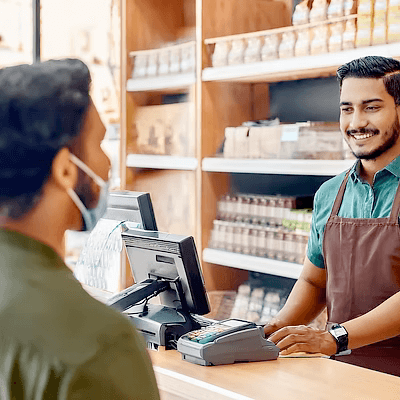
One session per employee. No crypto knowledge required — the order screen is shorter than a money order form.
Logins switched on, revenue share accruing on every order your staff place.
The arithmetic
You keep a share of every order. Bigger order, bigger share. The examples below use 1% to 3% — your own rate is in your agreement.
| At the counter | Order size | Store keeps (low) | Store keeps (high) |
|---|---|---|---|
| A customer cashes a check and puts part of it into Bitcoin | $200 | $2.00 | $6.00 |
| A regular buys USDT to send to family overseas | $500 | $5.00 | $15.00 |
| A customer sells crypto and takes the cash | $1,000 | $10.00 | $30.00 |
| A small business owner buys on payday, every other week | $2,500 | $25.00 | $75.00 |
| One larger order, the kind an ATM's daily cap refuses | $10,000 | $100.00 | $300.00 |
The figures above are worked examples, not projected or guaranteed earnings. They show how the arithmetic works on a given order size at an illustrative revenue-share range. Your actual rate is set in your agent agreement, and what any individual store earns depends on its foot traffic, its neighbourhood, its hours and how many customers it serves. Anytime Capital does not promise any level of income.
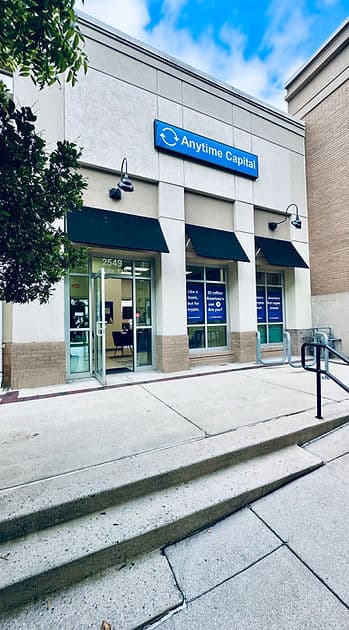
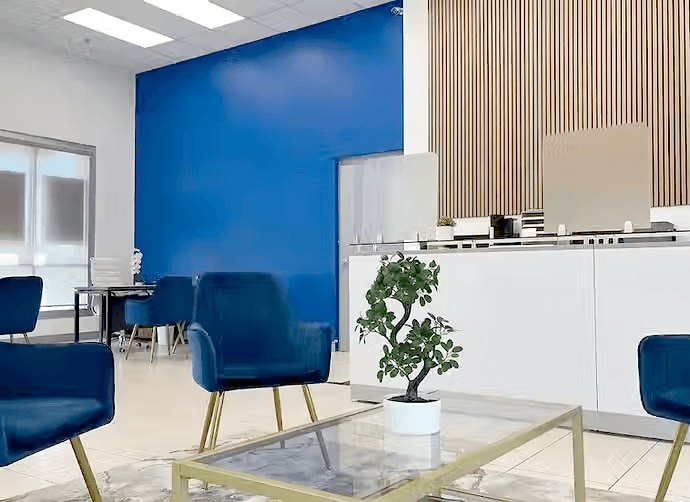
Anytime Capital runs its own branches in Atlanta and Miami. Partner stores run the same counter service.
The service desk, not the checkout lanes. Front-end lanes are optimised for throughput and a two-minute verification does not belong there; the desk is already the place customers go when a transaction takes longer than scanning groceries.
That also puts it next to the products it belongs with. A customer at the desk for a money order is the same customer who might buy crypto, and the conversation happens naturally because both are on the same screen-less counter.
Stores with no service desk can still run the program from the office or the manager's station. It just needs to be somewhere a customer can stand for two minutes without holding up a lane.
Independent grocers and carnicerías tend to serve tighter, more specific communities than chain supermarkets, and that is an advantage here. Crypto demand in cash-heavy immigrant neighbourhoods is real, under-served and spread by word of mouth through exactly the networks that shop with you.
Language matters as much as it does in a bodega. The reason a store counter beats an app for these customers is that the explanation happens in the language they use, from someone they already know.
None of that requires the store to advertise. Telling your regular service-desk customers is generally the whole marketing plan for the first two months.
Keep reading
The numbers, the rules and the alternative you have probably been offered.
The service desk, alongside money orders and bill payments. Front-end checkout lanes are the wrong place for a two-minute first-time verification.
Yes, as long as there is somewhere a customer can stand for a couple of minutes without holding up a lane — a manager's station or back office works.
A returning customer's order takes under a minute. Only the first visit takes longer, and the verification can be started on the customer's own phone while they finish shopping.
Not one of your own to act as a location for Anytime Capital's platform. What applies to your state and business type is confirmed during onboarding, and it is not legal advice.
Not to act as a serving location for Anytime Capital's platform. Anytime Capital is the registered money services business and carries the compliance programme for the activity. What applies to your specific store and state is confirmed during onboarding, and nothing here is legal advice.
A share of each order, set in your agent agreement. Because crypto is priced as a percentage of the order rather than a flat fee, the revenue moves with the ticket. The earnings page works the arithmetic through at five order sizes.
Tell us where the store is and what your customers keep asking for. We will tell you what we can offer at your location.