MSB registration — ours
Anytime Capital is registered with FinCEN as a money services business and operates under that registration for the activity your counter performs.
It is the first question every serious store owner asks, and it deserves a direct answer rather than a brochure. Here is how the arrangement is structured, who holds what, and where your own obligations begin and end.

31000321862986
FinCEN MSB registration number — Anytime Capital
To act as a serving location for Anytime Capital's retail platform, your store does not need to obtain a money services business registration or a money transmitter licence of its own. Anytime Capital is the registered money services business — FinCEN registration number 31000321862986 — and it is Anytime Capital's compliance programme that governs the activity your counter is performing.
That is the structural point, and it is the reason this model works for an independent store at all. Your store is not becoming a crypto business, is not taking custody of digital assets, is not controlling private keys, and is not the counterparty to the customer's transaction. Your employee is operating our platform on behalf of a customer standing in your store.
The longer answer is that regulation of this activity is genuinely state-specific and situation-specific, and what applies to a licensed check casher in Florida is not necessarily what applies to a convenience store in another state. That is exactly what the onboarding review is for. Nothing on this page is legal advice, and every store should take its own.
Who does what
The useful way to read this is as two columns: things that are ours, and things that stay yours.
Anytime Capital is registered with FinCEN as a money services business and operates under that registration for the activity your counter performs.
Identity document capture, face match with liveness, and the customer identification programme behind them run on Anytime Capital's stack.
Sanctions and watchlist screening, ongoing transaction monitoring, and the recordkeeping and reporting obligations that attach to the activity.
Your store never holds cryptocurrency and never controls a private key. There is nothing on your premises to safeguard.
Following the training, operating the platform honestly, collecting the payment and escalating anything that does not look right.
A check casher or money transmitter licence your store already holds remains yours, with its own obligations. Nothing here replaces it.
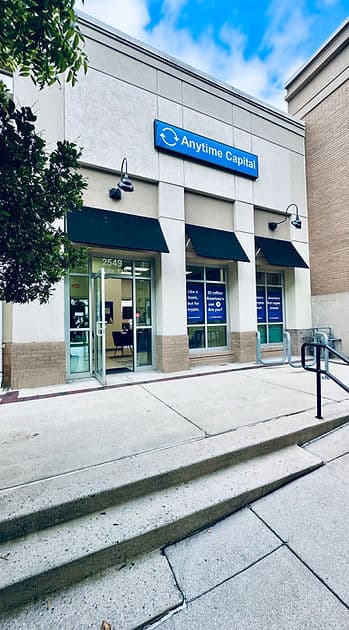

Anytime Capital runs its own branches in Atlanta and Miami. Partner stores run the same counter service.
Retail stores have acted as locations for licensed financial businesses for decades. That is what a Western Union agent is. It is what a bill payment location is. It is what a licensed lottery retailer is, in a different sector. In each case a regulated principal holds the authorisation and the compliance programme, and a retail location performs a defined set of activities under it, with training and supervision.
Crypto has been slower to arrive at that model in the United States for the practical reason that kiosks got there first — a machine is a simpler thing to place than a trained counter. But the underlying legal shape is the one retail has used for a long time, and it is the reason a store can participate without becoming a financial institution.
What the model does require is that the principal takes the obligations seriously. Anytime Capital operates branches of its own in Atlanta and Miami, runs identity verification with liveness on every customer, and files what it is required to file. A store joining the program is joining that programme, not being handed a licence-shaped shortcut around it.
Follow the training. Do not work around the verification step — it exists to protect your store as much as anyone else. Collect the payment the platform says to collect. Do not give investment advice, which is the same rule your counter already follows for every other regulated product it sells.
And escalate anything that feels wrong. A customer who seems to be acting for someone else. A person who gets evasive when asked for ID. Orders structured to sit just under a threshold. Your staff are trained on what to do, and support is on the other end of it. Nobody at your counter is expected to make a judgement call alone.
That is genuinely the whole list of store obligations. It is short because the design keeps it short.
Money transmission and virtual currency activity are regulated at both federal and state level in the United States, and the state picture is not uniform. Some states have specific virtual currency regimes. Some treat the activity under existing money transmission law. Some have particular expectations of agent locations. This changes, and it changes at different speeds in different places.
So the honest answer to "can I do this in my state" is that we will tell you during onboarding, for your specific location and business type, rather than publish a map that will be wrong somewhere within a quarter. Anytime Capital already serves customers across most US states and that footprint is what the retail conversation starts from.
You should also take your own advice. Any store owner making a decision of this kind should run it past their own counsel or compliance advisor. We would rather you did.
Related
How the counter works, and what it is worth.
Not to act as a serving location for Anytime Capital's platform. Anytime Capital holds the FinCEN money services business registration (31000321862986) and operates the compliance programme for the activity. What applies to your specific store and state is confirmed during onboarding.
Requirements differ by state and by the kind of business you run, which is why we review it per location rather than publishing a blanket answer. If your store already holds a licence, it stays yours and its obligations remain yours.
No. Nothing on this page or anywhere in this section is legal advice, and no page can be, because the answer turns on your state, your entity and your existing licences. Take your own advice — we encourage it.
Anytime Capital, as the registered money services business, carries the recordkeeping and regulatory reporting obligations that attach to the activity your counter performs.
No. Your store never holds cryptocurrency and never controls a private key. Assets are delivered to the customer's own wallet.
A government-issued photo identity document plus a selfie with a liveness check, along with the information the customer identification programme requires. It happens once, at the customer's first visit.
Then the order does not happen. That is not a judgement call your cashier has to defend — it is how the platform works, and it is the same for every customer at every location including Anytime Capital's own branches.
They escalate it. The training covers what to look for and what to do, and support is available around the clock. No employee is expected to investigate or to make a determination on their own.
Tell us where you are and what licences you already hold. We will tell you what we can offer at your location.