It does not compete for shelf space
No planogram change, no cooler to reset, no vendor asking for an endcap. The service is a browser tab.
A convenience store lives on volume and thin margins. Crypto is the opposite shape of product: a handful of transactions a day, each worth many times a typical basket, sold to customers who are already walking in for something else.
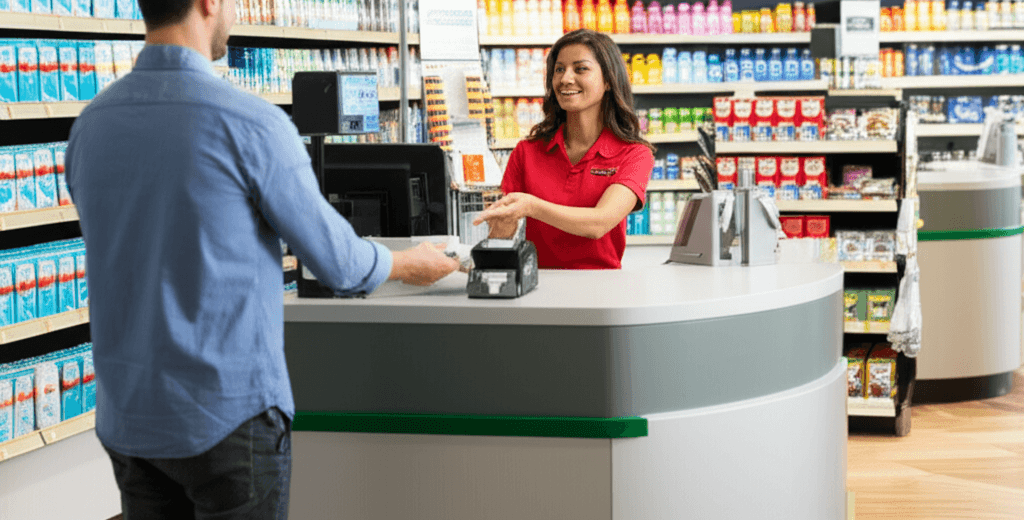
$250.00
Bitcoin · bought on the way home from work
Convenience retail is a square-footage business. Every product on your floor is competing for space, and the calculation you run on a new line is always the same: how much does it turn, what does it cost to hold, and what does it displace. Crypto is the rare addition that answers none of those questions because it takes up no space at all — there is no stock, no facing, no expiry date and no delivery.
What it does take is a moment of a clerk's attention, and that is a real cost during a rush. The trade is that a single crypto order can be worth more to the store than a very large number of drinks and snacks, which changes the arithmetic on which minute of counter time is worth spending on what.
The customer is usually already yours. Convenience stores in dense neighbourhoods have the same regulars every day — the shift worker at 6am, the school run at 3pm, the after-work stop at 6pm. Those regulars have seen a Bitcoin machine somewhere. Very few of them know they could buy from you.
Why it fits
Every store type in this program runs the same platform. What changes is the customer, the ticket size and the objection — so this is the part written for you rather than for everybody.
No planogram change, no cooler to reset, no vendor asking for an endcap. The service is a browser tab.
A c-store's average transaction is small by design. Crypto is priced as a percentage of the order, so one customer can be worth a whole afternoon of baskets.
Payday afternoons and the first of the month are the same peaks your store already staffs for.
Customers ask about Bitcoin in convenience stores constantly, usually because they have seen a kiosk in another one.
Getting started
Where the store is, what it already offers, and what your foot traffic looks like. We tell you straight away whether we can serve your market.
Entity documents, ownership and any licences your store already holds. Days, not months.
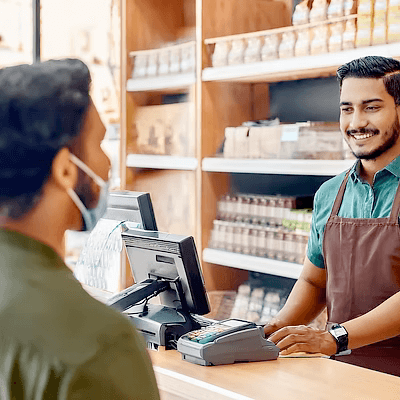
One session per employee. No crypto knowledge required — the order screen is shorter than a money order form.
Logins switched on, revenue share accruing on every order your staff place.
The arithmetic
You keep a share of every order. Bigger order, bigger share. The examples below use 1% to 3% — your own rate is in your agreement.
| At the counter | Order size | Store keeps (low) | Store keeps (high) |
|---|---|---|---|
| A customer cashes a check and puts part of it into Bitcoin | $200 | $2.00 | $6.00 |
| A regular buys USDT to send to family overseas | $500 | $5.00 | $15.00 |
| A customer sells crypto and takes the cash | $1,000 | $10.00 | $30.00 |
| A small business owner buys on payday, every other week | $2,500 | $25.00 | $75.00 |
| One larger order, the kind an ATM's daily cap refuses | $10,000 | $100.00 | $300.00 |
The figures above are worked examples, not projected or guaranteed earnings. They show how the arithmetic works on a given order size at an illustrative revenue-share range. Your actual rate is set in your agent agreement, and what any individual store earns depends on its foot traffic, its neighbourhood, its hours and how many customers it serves. Anytime Capital does not promise any level of income.
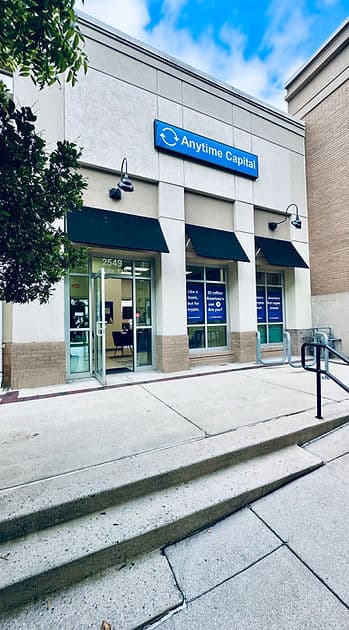

Anytime Capital runs its own branches in Atlanta and Miami. Partner stores run the same counter service.
The honest tension in a convenience store is speed. Your queue expects to be through in under a minute, and a first-time crypto verification takes one to two. The practical answer is the same one stores use for lottery claims and money orders: the customer steps aside.
In practice a clerk starts the verification on the customer's own phone, serves the next three people, and comes back to finish the order. Returning customers skip the step entirely, and after a few weeks most of your crypto volume is returning customers.
Stores that try to run a first-time onboarding at the register during a rush find it frustrating. Stores that treat it like a money order — step to the side of the counter, we will call you — do not.
Convenience stores tend to see a slower start than check cashers and then a sharper curve, because the demand exists but nobody knows to ask you. The first orders usually come from customers who saw the service mentioned or asked on a hunch.
The pattern that follows is word of mouth inside a small radius. Crypto buyers in a neighbourhood talk to each other, and a store that serves one well gets the friend, the brother and the coworker.
None of that requires you to spend money. There is no equipment to earn back, so a slow month costs the store nothing but the counter time it did not use.
Keep reading
The numbers, the rules and the alternative you have probably been offered.
A returning customer's order takes under a minute. A first-time verification takes one to two minutes and is best handled the way you handle a money order — step the customer aside, keep the line moving, come back to them.
No. The platform runs in a browser on the PC you already have, or on a tablet or phone. There is no terminal and no signage requirement.
Yes. The order screen is shorter than a money order form. The training is one session and requires no knowledge of cryptocurrency.
It depends on your site. A machine works overnight and needs no staff involvement; it also takes floor space, has daily limits and puts the customer experience outside your control. The comparison page sets both out line by line.
Not to act as a serving location for Anytime Capital's platform. Anytime Capital is the registered money services business and carries the compliance programme for the activity. What applies to your specific store and state is confirmed during onboarding, and nothing here is legal advice.
A share of each order, set in your agent agreement. Because crypto is priced as a percentage of the order rather than a flat fee, the revenue moves with the ticket. The earnings page works the arithmetic through at five order sizes.
Tell us where the store is and what your customers keep asking for. We will tell you what we can offer at your location.