Local terms for this counter
bodega · casa de cambio · agente bancario · cambista
Peru runs a genuinely bimonetary economy where prices are quoted in soles and dollars side by side, and exchanging between them at a counter is an everyday act.
$500.00
Counter order · Peru
Peru is one of the few economies where dollars and the local currency circulate together as a matter of routine — property is priced in dollars, savings are held in dollars, and street-level currency exchange is ordinary rather than marginal.
That gives a Peruvian counter something most markets lack: customers who already think in two currencies and already convert between them regularly.
Anytime Capital's retail counter is live in the United States. International partner locations are onboarded market by market as local licensing allows, so the first conversation is always about what is possible where your store actually is.
The local picture
The format has a different name in every market and does the same job in all of them. This is the version that applies here.
bodega · casa de cambio · agente bancario · cambista
Neighbourhood bodegas, currency exchange houses, banking agents inside shops, market stalls.
United States, Spain, Chile, Japan, Italy — where the money moves, and why stablecoins matter at this counter.
Spanish, Quechua. Serving a customer in their own language is the single biggest advantage a counter has over an app.
The arithmetic
You keep a share of every order. Bigger order, bigger share. The examples below use 1% to 3% — your own rate is in your agreement.
| At the counter | Order size | Store keeps (low) | Store keeps (high) |
|---|---|---|---|
| A customer cashes a check and puts part of it into Bitcoin | $200 | $2.00 | $6.00 |
| A regular buys USDT to send to family overseas | $500 | $5.00 | $15.00 |
| A customer sells crypto and takes the cash | $1,000 | $10.00 | $30.00 |
| A small business owner buys on payday, every other week | $2,500 | $25.00 | $75.00 |
| One larger order, the kind an ATM's daily cap refuses | $10,000 | $100.00 | $300.00 |
The figures above are worked examples, not projected or guaranteed earnings. They show how the arithmetic works on a given order size at an illustrative revenue-share range. Your actual rate is set in your agent agreement, and what any individual store earns depends on its foot traffic, its neighbourhood, its hours and how many customers it serves. Anytime Capital does not promise any level of income.
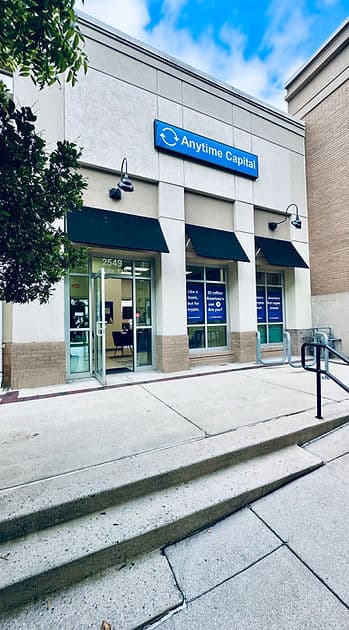
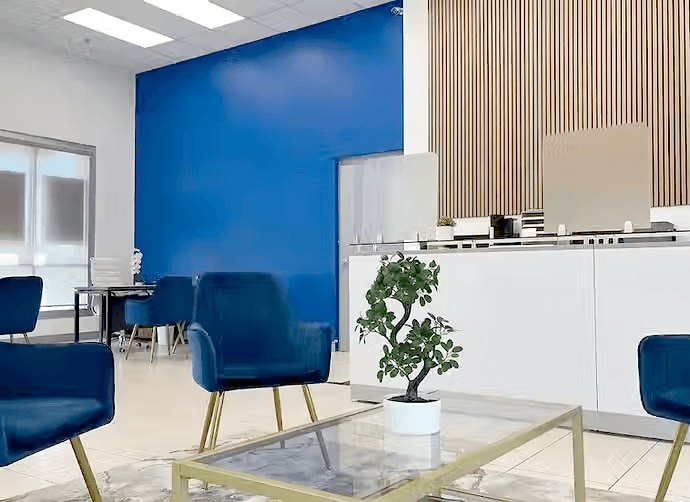
Anytime Capital runs its own branches in Atlanta and Miami. Partner stores run the same counter service.
Peruvian bodegas — the same word used in New York, for a related but distinct format — are the dominant neighbourhood retail channel, and the banking agent model has put financial services inside a great many of them.
The casa de cambio is the formal exchange business, and street cambistas operate alongside it in some districts. The formal end of that spectrum is where this program fits.
Because dollar familiarity is already high, a dollar stablecoin is an easier product to explain in Peru than almost anywhere in the region.
Peru's regulatory framework for virtual assets has been developing, including anti-money-laundering registration obligations. Availability depends on local licensing.
Anytime Capital's retail counter is live in the United States. International partner locations are onboarded market by market as local licensing allows, so the first conversation is always about what is possible where your store actually is.
Anytime Capital is a registered US money services business and operates its own branches in Atlanta and Miami. The retail program extends that same platform to partner counters — which is why availability follows licensing rather than ambition, and why the first conversation about any international market is a straight one.
An employee signs in to the retail platform in a browser, runs a one-to-two minute identity verification for a first-time customer, places the order at a live price and takes the payment at the counter. Returning customers skip the verification entirely.
The store never holds cryptocurrency, never controls a private key and never funds a float. There is no equipment to buy, lease or install.
The customer receives the asset to a wallet they control, with the delivery recorded on a public blockchain — which is a stronger receipt than most counter products anywhere in the world can offer.
Related
The rest of the programme, and the region this market sits in.
Unusually well. The economy is genuinely bimonetary, so holding and converting dollars is an ordinary household activity rather than a specialist one.
Casas de cambio for the formal exchange business, and bodegas operating as banking agents for neighbourhood reach.
Anytime Capital's retail counter is live in the United States. International partner locations are onboarded market by market as local licensing allows, so the first conversation is always about what is possible where your store actually is. We will tell you plainly what is and is not possible where you are rather than taking you through an onboarding that cannot finish.
In the United States, a store acting as a serving location does not need its own money services business registration — Anytime Capital holds it. Outside the United States the answer depends entirely on the local regime, which is why availability is assessed market by market.
An employee signs in, verifies the customer once, places the order and takes the payment at the counter. There is no machine to install, no crypto for the store to hold and no float to fund.
Tell us where your counter is and what your customers are asking for. We will be straight with you about what is possible in your market today.