Nobody has to unjam anything
A note acceptor that rejects a worn twenty is your problem to explain and the operator's problem to fix, usually on their schedule. A counter service has no moving parts.
If someone has offered to put a crypto kiosk in your store, you already understand the demand. This page is about the other way to serve it: the same customers, the same cash, the same neighbourhood — run from your counter instead of from a machine you do not own.
$0.00
What the store spends to start
Crypto kiosk operators have spent years signing up exactly the stores this program is built for: check cashers, gas stations, corner stores, smoke shops. The pitch is consistent — we install a machine, we handle everything, you get a share of the fees and some extra foot traffic. Plenty of stores have taken it, and for some sites it works.
It is worth being precise about what that deal actually is, though. A kiosk is a physical asset placed in your store under a contract. It occupies floor space you are paying rent on. It needs power and connectivity. It has daily and per-transaction limits set by the operator. Its pricing is not yours to influence, and it is the part of the crypto industry consumers complain about most. When it jams, misreads a note or goes offline, the customer standing in front of it turns to your staff — who have no ability to help, because the transaction was never theirs.
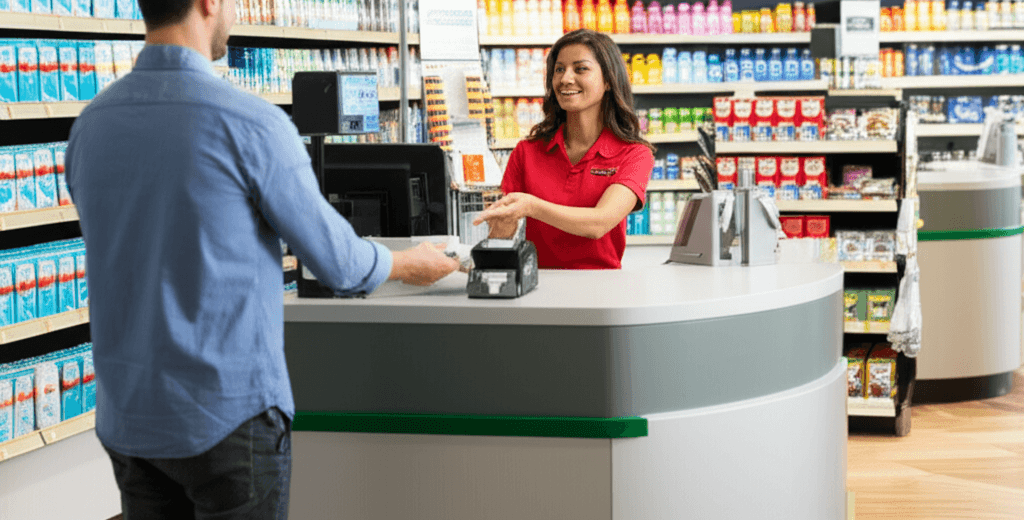
A counter service is a different arrangement to the same demand. Nothing is installed. Your employee runs the order, so your staff can actually help. Larger orders are a conversation rather than a limit enforced by a note acceptor. And the service is not confined to one corner of the store — anyone on shift can serve a crypto customer from any position on the counter.
The practical differences
These are the differences that show up in the day-to-day rather than in the pitch deck.
A note acceptor that rejects a worn twenty is your problem to explain and the operator's problem to fix, usually on their schedule. A counter service has no moving parts.
Kiosk limits turn away exactly the customer you most want. Counter service handles size as a conversation, within the limits agreed for your location.
No footprint, no clearance, no landlord conversation, no fixture to work around when you rearrange the store.
The customer's relationship stays with your store because your employee ran the transaction, backed by 24/7 US-based support.
A machine serves one customer. A counter serves as many customers as you have staff on shift.
Customers pay Anytime Capital's published rates rather than kiosk pricing, which is the single most common complaint about the machines.
Your brand
Your sign-in page will carry your store's logo and your store's colours. Your customer sees the shop they already know, not a company they have never heard of.
That is the difference between this and a branded machine in your corner. The machine sells someone else's name in your shop. This sells yours.
Pick a colour to see it. This is a mockup — send us your logo during onboarding.
$500.00
Bitcoin · paid in cash
The arithmetic
You keep a share of every order. Bigger order, bigger share. The examples below use 1% to 3% — your own rate is in your agreement.
| At the counter | Order size | Store keeps (low) | Store keeps (high) |
|---|---|---|---|
| A customer cashes a check and puts part of it into Bitcoin | $200 | $2.00 | $6.00 |
| A regular buys USDT to send to family overseas | $500 | $5.00 | $15.00 |
| A customer sells crypto and takes the cash | $1,000 | $10.00 | $30.00 |
| A small business owner buys on payday, every other week | $2,500 | $25.00 | $75.00 |
| One larger order, the kind an ATM's daily cap refuses | $10,000 | $100.00 | $300.00 |
The figures above are worked examples, not projected or guaranteed earnings. They show how the arithmetic works on a given order size at an illustrative revenue-share range. Your actual rate is set in your agent agreement, and what any individual store earns depends on its foot traffic, its neighbourhood, its hours and how many customers it serves. Anytime Capital does not promise any level of income.
Side by side
Most store owners have already been pitched a Bitcoin ATM. It is worth being precise about what the two arrangements actually ask of you, because they are not the same deal in a different wrapper.
| Criterion | Anytime Capital retail counter | Hosting a Bitcoin ATM | Doing nothing |
|---|---|---|---|
| Up-front cost to the store | None. No machine, no lease, no deposit. | A kiosk on your floor — bought, leased or placed under contract. | None. |
| Floor space | A few inches of counter for a phone or tablet. | A machine footprint, plus clearance and a power outlet. | None. |
| Who holds the crypto | Anytime Capital. You never touch a wallet or a private key. | The operator. | — |
| Who funds the cash | Your customer pays you at the counter, the way they already do. | Cash-recycling machines have to be loaded and emptied. | — |
| Order sizes | Counter service, so larger orders are a conversation, not a hard machine cap. | Bounded by the kiosk's daily limits and its note acceptor. | — |
| What the customer pays | Anytime Capital's published rates, the same as anywhere else on the platform. | Kiosk pricing, which the industry is widely criticised for. | — |
| Compliance and reporting | Run by Anytime Capital as the registered money services business. | Run by the operator. | — |
| Who the customer asks for help | Your staff, backed by 24/7 US-based support. | A phone number on the machine. | — |
| Revenue to the store | A share of every order your store places. | A share of the machine's fees, per your placement agreement. | None. |
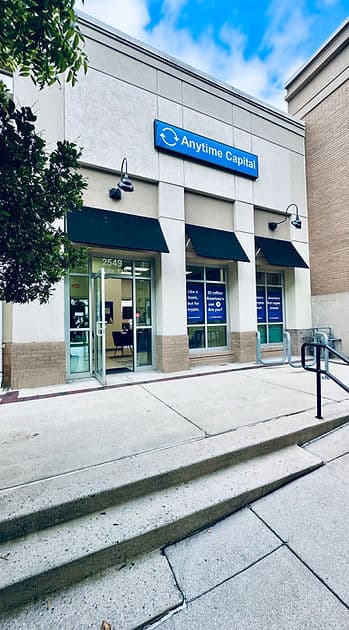

Anytime Capital runs its own branches in Atlanta and Miami. Partner stores run the same counter service.
There are sites where a machine wins, and pretending otherwise would be dishonest. A location open 24 hours whose overnight staff cannot leave a secured window. A store with spare floor space and no interest in adding a service to the counter. An owner who wants the revenue with zero staff involvement of any kind.
If that is your store, take the placement. The argument here is not that kiosks are worthless; it is that the machine has been presented as the only way for a store to earn from crypto, and it is not.
Plenty of stores also run both. A kiosk for after-hours self-service and a counter service for the daytime queue is a perfectly coherent arrangement, and the two do not conflict.
Anytime Capital has written publicly for years about the cost of buying crypto at kiosks, and the site's comparison pages set out the case in detail rather than in slogans. The short version is that effective costs at machines are frequently far above what a customer expects from the screen, and that is the reason a large share of the company's retail customers arrive having used one.
That matters to a store owner commercially, not morally. Pricing your customers resent is pricing they eventually walk away from. And when they walk away from a machine in your store, they do not separate the machine from you.
If you want the consumer-side version of this argument to read for yourself, the site's why-not-use-bitcoin-ATMs page and its comparison pages cover it.
Related
The numbers, the rules, and who the program is for.
In most cases yes, subject to whatever exclusivity your existing placement agreement contains — read it, because some operators write in exclusivity that covers any competing crypto service on the premises. The retail team can talk through what your agreement allows.
A kiosk's map listing does bring some walk-ins, and that is a genuine advantage of a machine. Counter locations are discoverable too, and the larger driver in practice is your existing customers finding out and telling each other.
A counter service runs when your staff do. If overnight self-service matters to your site, that is one of the clearest reasons to consider a kiosk, and it is why some stores run both.
None. The platform is a website your staff sign into on a device you already own.
Anytime Capital, as the registered money services business, exactly as it does for every other order on the platform. That does not change with the form factor.
Counter service is not bounded by a machine's note acceptor or its self-service daily cap, and larger orders can be handled as a conversation. Actual limits for your location are set during onboarding based on your store and the applicable rules.
Send us the placement agreement terms you are weighing, or just tell us about the store. We will be straight with you about which one fits your site.