Local terms for this counter
bureau de change · locutorio · kantor · tabaccheria · ricevitoria · money transfer shop · newsagent
European high streets still run a dense network of counters that handle cash for people the banking system serves poorly — bureaux de change, money transfer shops, locutorios, kantors, tabaccherie.
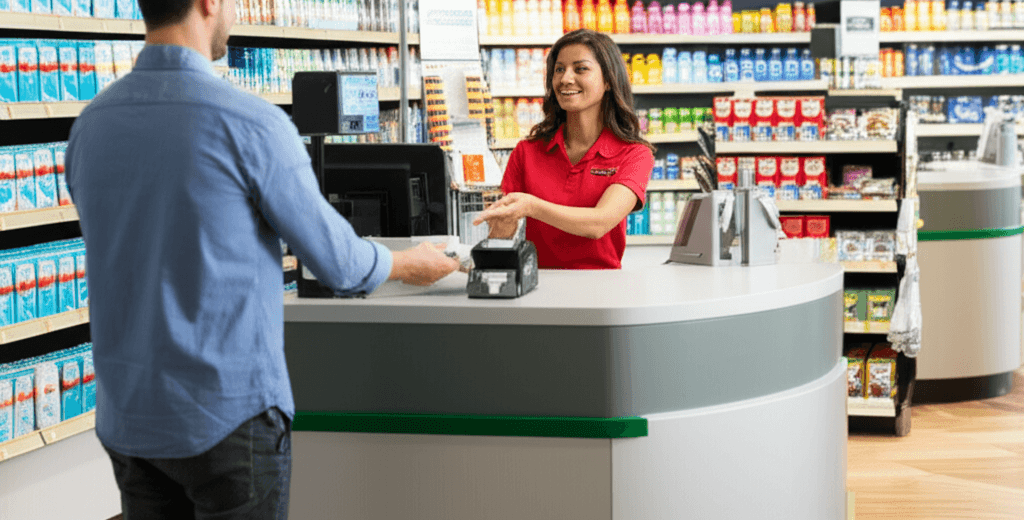
$500.00
Counter order · Europe & the UK
Europe is often described as a card-first continent, which is true of the mainstream and misleading about the margins. Across the UK, Spain, Italy, Poland, Portugal and the rest, a substantial population — migrant workers, cash-paid trades, people without a full banking relationship — still transacts at counters, and the retail formats that serve them are numerous and long-established.
Those counters already handle the two things this program needs: identification and cash. What they generally do not yet offer is a compliant route into digital assets, which their customers increasingly ask about.
Anytime Capital's retail counter is live in the United States. International partner locations are onboarded market by market as local licensing allows, so the first conversation is always about what is possible where your store actually is.
The local picture
The format has a different name in every market and does the same job in all of them. This is the version that applies here.
bureau de change · locutorio · kantor · tabaccheria · ricevitoria · money transfer shop · newsagent
Currency exchange bureaux, money transfer shops, licensed tobacconists and payment agents, convenience stores, phone and call shops.
Romania, Poland, Morocco, Nigeria, India, Pakistan, Philippines, Ukraine — where the money moves, and why stablecoins matter at this counter.
English, Spanish, Polish, Italian, Portuguese, Romanian. Serving a customer in their own language is the single biggest advantage a counter has over an app.
The arithmetic
You keep a share of every order. Bigger order, bigger share. The examples below use 1% to 3% — your own rate is in your agreement.
| At the counter | Order size | Store keeps (low) | Store keeps (high) |
|---|---|---|---|
| A customer cashes a check and puts part of it into Bitcoin | $200 | $2.00 | $6.00 |
| A regular buys USDT to send to family overseas | $500 | $5.00 | $15.00 |
| A customer sells crypto and takes the cash | $1,000 | $10.00 | $30.00 |
| A small business owner buys on payday, every other week | $2,500 | $25.00 | $75.00 |
| One larger order, the kind an ATM's daily cap refuses | $10,000 | $100.00 | $300.00 |
The figures above are worked examples, not projected or guaranteed earnings. They show how the arithmetic works on a given order size at an illustrative revenue-share range. Your actual rate is set in your agent agreement, and what any individual store earns depends on its foot traffic, its neighbourhood, its hours and how many customers it serves. Anytime Capital does not promise any level of income.
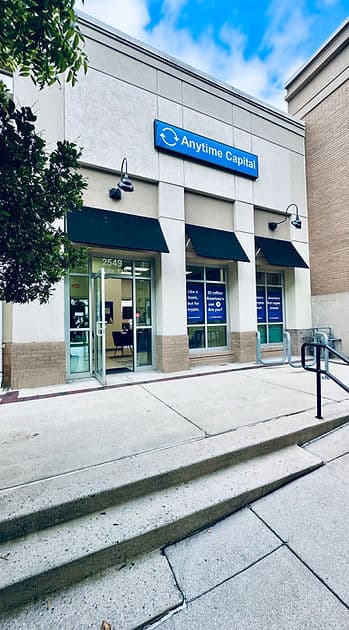

Anytime Capital runs its own branches in Atlanta and Miami. Partner stores run the same counter service.
Each market has its own version. In the UK it is the bureau de change, the money transfer shop and the newsagent acting as a payment point. In Spain it is the locutorio — originally a call shop, now a general migrant financial counter. In Poland it is the kantor, an exchange office format with no real equivalent elsewhere. In Italy it is the tabaccheria and the ricevitoria, licensed retailers that handle bill payments and government transactions.
They look different and they do the same job: a trusted local counter for people whose money is physical.
Europe also has the tightest anti-money-laundering supervision of any region in this section, which is a feature rather than a problem for a program built on identity verification and a licensed principal.
The EU's markets-in-crypto-assets framework and the UK's own regime both require authorisation for crypto asset services. Availability in any European market depends on that licensing and is determined market by market.
Anytime Capital's retail counter is live in the United States. International partner locations are onboarded market by market as local licensing allows, so the first conversation is always about what is possible where your store actually is.
Anytime Capital is a registered US money services business and operates its own branches in Atlanta and Miami. The retail program extends that same platform to partner counters — which is why availability follows licensing rather than ambition, and why the first conversation about any international market is a straight one.
An employee signs in to the retail platform in a browser, runs a one-to-two minute identity verification for a first-time customer, places the order at a live price and takes the payment at the counter. Returning customers skip the verification entirely.
The store never holds cryptocurrency, never controls a private key and never funds a float. There is no equipment to buy, lease or install.
The customer receives the asset to a wallet they control, with the delivery recorded on a public blockchain — which is a stronger receipt than most counter products anywhere in the world can offer.
Markets in this region
Each market has its own counter format, its own corridors and its own regulatory position.
It makes it more formal, which suits a model built on a licensed principal carrying the compliance programme. What it means in practice for any given market is a licensing question, determined market by market.
Bureaux de change and money transfer shops first, then locutorios, kantors and licensed payment retailers such as Italian tabaccherie — the formats whose customers already transact in cash at a counter.
Anytime Capital's retail counter is live in the United States. International partner locations are onboarded market by market as local licensing allows, so the first conversation is always about what is possible where your store actually is. We will tell you plainly what is and is not possible where you are rather than taking you through an onboarding that cannot finish.
In the United States, a store acting as a serving location does not need its own money services business registration — Anytime Capital holds it. Outside the United States the answer depends entirely on the local regime, which is why availability is assessed market by market.
An employee signs in, verifies the customer once, places the order and takes the payment at the counter. There is no machine to install, no crypto for the store to hold and no float to fund.
Tell us where your counter is and what your customers are asking for. We will be straight with you about what is possible in your market today.