Filecoin · FIL
Filecoin for business: storage as a commodity market
Filecoin turned data storage into an open market — providers stake collateral and prove, cryptographically and continuously, that your data is really stored. FIL is how that market pays and penalizes.
.svg)
Filecoin is the largest decentralized storage network: independent providers around the world offer capacity, clients pay to store data, and the protocol enforces honesty through cryptographic proofs — providers post FIL collateral and demonstrate, on an ongoing basis, that the exact bytes they were paid to store remain stored. Fail the proof, lose the stake.
For businesses, that's a genuinely new procurement option: archival and dataset storage priced by open-market competition rather than a hyperscaler's rate card, with integrity guarantees that are mathematical rather than contractual. FIL is the market's native payment and collateral asset.
Why businesses hold FIL
The operational case: teams storing archives, media libraries, or AI training datasets on Filecoin pay in FIL — a working balance is part of the stack, purchased properly through the entity's account. The AI-data angle is live: large open datasets increasingly use Filecoin as a verifiable archival layer.
The position case is the commodity-market thesis: storage demand compounds forever, and FIL is the payment asset of the only open storage market operating at meaningful scale. Entries at desk quotes; exits route through liquid pairs with same-day USD settlement.
How businesses use FIL
Verifiable archival storage
Store compliance archives and datasets with cryptographic proof-of-storage, paying market rates in FIL.
AI dataset infrastructure
Teams distributing or preserving large training datasets use Filecoin's verifiable storage and hold FIL operationally.
Storage-market exposure
Hold FIL as a position on decentralized storage becoming a standard procurement lane.
One business account
Hold FIL in the company's name
Your Filecoin position sits in an account titled to your legal entity, with statements and settlement to match — bought at desk-quoted prices, custodied where your policy says, and convertible to dollars the day you decide.
- Entity-titled accounts, approved same day for most businesses
- Free non-custodial wallet — the company holds its own keys
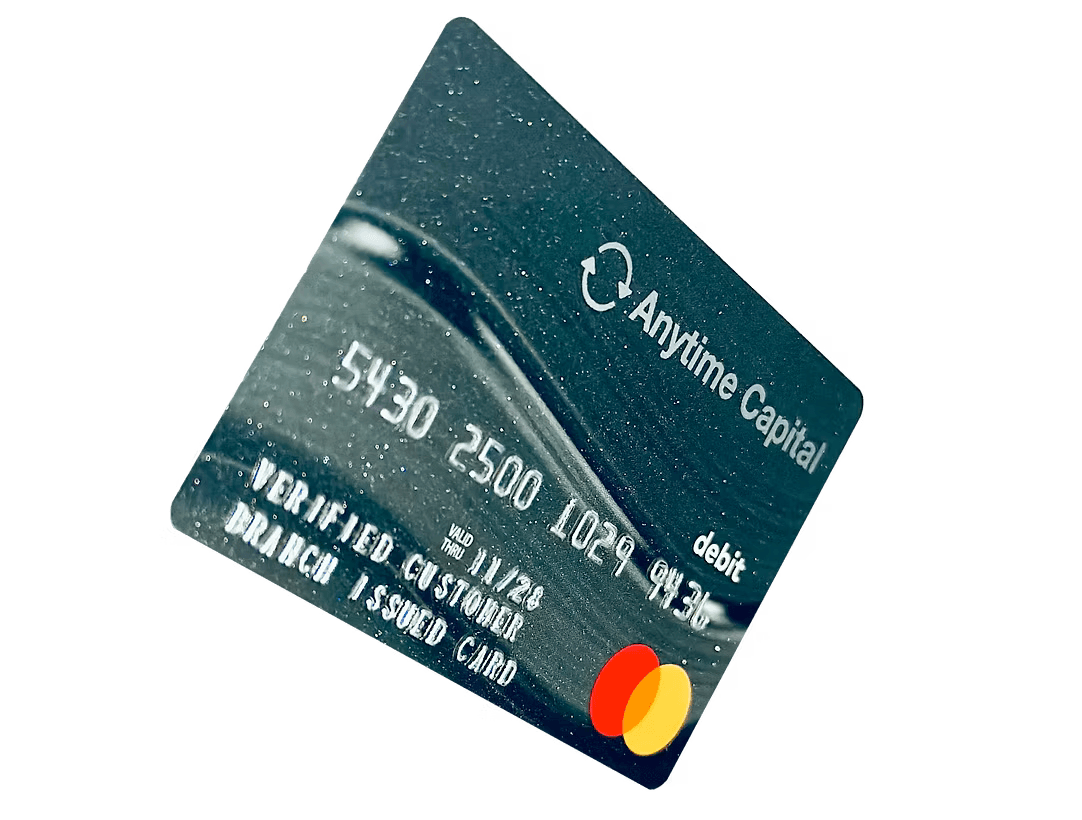
- Business Mastercard® debit cards for spending balances
Payment rails
Move money around your FIL position
Fund Filecoin purchases by business wire or card, and settle sales back to USD the same day — with branch service for the workflows that need it.
Money in — buy crypto
- Business wire (Fedwire)Bank-to-bank funding at any size — the rail for serious purchases.
- Debit & credit cardsBusiness cards accepted for fast, smaller buys — minutes to position.
- Cash at a branchHandled in person, compliantly, at our Atlanta and Miami offices.
Money out — off-ramp to USD
- Same-day ACH, Fedwire & RTPDollars in your operating account the day you sell — RTP can post in minutes.
- Cashier's checkBank-issued paper for closings, escrow, and counterparties who want it.
- Cash at a branchIn-person cash service with standard ID and reporting, at our branches.
Business Mastercard® debit cards are also available for spending from your account. About business cards →
Filecoin for business — FAQ
How do we know data on Filecoin is actually stored?
Providers must continuously submit cryptographic proofs that the specific data remains stored; failing costs them staked FIL. Integrity is enforced by protocol economics, not a service-level agreement.
Is Filecoin a replacement for our cloud provider?
Think archival and dataset layer, not hot storage: it excels at large, durable, verifiable storage where cost and integrity matter more than millisecond retrieval.
Can our company buy FIL here?
Yes — at quoted prices through your business account, titled to the entity.
And selling FIL later?
Exits route through the desk via liquid pairs, settling USD same day by Fedwire, RTP, or ACH.
Put FIL to work
.svg)
.svg)
.svg)
.svg)
.svg)
.svg)
.svg)
.svg)
.svg)
.svg)
.svg)
.svg)
Add Filecoin to your company's balance sheet
Open a business account — most are approved the same day — and buy FIL by wire or card with desk execution behind it.
Important Disclosures
- Cryptocurrencies and stablecoins are not FDIC-insured deposits, are not bank guaranteed, and can involve risk, including possible loss of value.
- Cryptocurrency transactions are irreversible once confirmed. Verify all details before sending.
- Business verification (KYB) is required to open an account; approval timing depends on the completeness of your application and the complexity of your entity structure.
- Settlement timing depends on payment method, banking cutoffs, and your bank's participation in the relevant network. Same-day settlement is available for transactions confirmed within banking-hour windows.
- Third-party company, platform, and fund names are referenced for identification and description only; no affiliation, sponsorship, or endorsement is implied. All trademarks belong to their owners.
- Anytime Capital is a licensed money services business. Information on this page is educational and is not financial, legal, or tax advice.